


Key design directions for 2026
At a time when environmental challenges and societal shifts are reshaping the way we live, the luxury real estate market is moving toward a more considered approach. In 2026, the most remarkable properties are no longer defined solely by their address, but by their ability to embody a way of living that is more coherent, more sustainable, and more attuned to its surroundings.
This evolution is reflected in deliberate architectural choices, where every material, every volume, and every opening contributes to a cohesive vision.
A return to essential materials
The use of natural materials has become a defining signature of contemporary properties. Stone, wood, and metal come together to create spaces that are both structured and timeless.
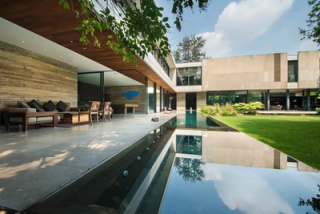
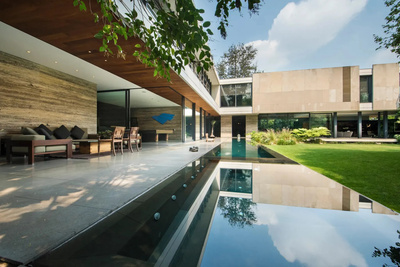
The AA315 residence, located in the Lomas de Chapultepec district of Mexico City, perfectly illustrates this approach. Designed by Bernardi + Peschard, with interiors by Gloria Cortina, it showcases a refined palette of stone, wood, and metal. Swiss larch and Macassar ebony joinery, expansive marble surfaces, and a sculptural staircase crafted by artisan Simón Hamui give the property a presence that is both understated and expressive.
In properties of this caliber, materials are not merely finishes—they become the guiding thread of the architectural vision.
A renewed appreciation for craftsmanship
The renewed emphasis on craftsmanship has become a defining feature of character properties. Bespoke elements, rooted in local expertise and traditions, bring a depth and individuality that cannot be easily replicated.
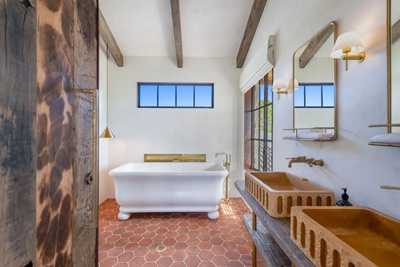
The property Lo Scoglio, located in Coopers Shoot near Byron Bay, Australia, offers a particularly compelling example. Inspired by traditional Sicilian masserias, it combines hand-chipped limestone walls, aged timber flooring, terracotta finishes, and brass details sourced through Tigmi Trading.
The result is a residence where every detail reflects a thoughtful approach to materiality and craftsmanship, seamlessly integrated with contemporary features such as solar energy systems and rainwater harvesting.
Designing for longevity
In response to growing climate challenges, certain properties are now integrating architectural solutions designed for long-term resilience. This approach brings together innovation and time-honored techniques.
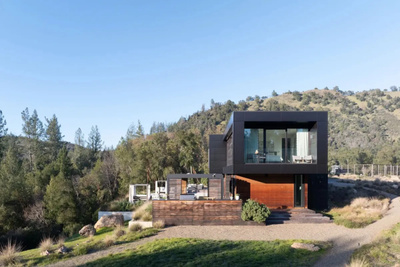
In Calistoga, California, a residence designed by Signum Architecture features an exterior envelope that combines timber treated using the Japanese shou sugi ban technique with stained cedar. This choice provides natural resistance to fire and insects, while maintaining a warm, refined aesthetic.
Paired with concrete and expansive glazing, the property reflects a holistic approach in which durability and architectural quality evolve in harmony.
Glazing as an architectural signature
Glazing has become a defining architectural element in contemporary property design. No longer limited to opening up spaces, it now plays a central role in shaping and elevating the overall composition.
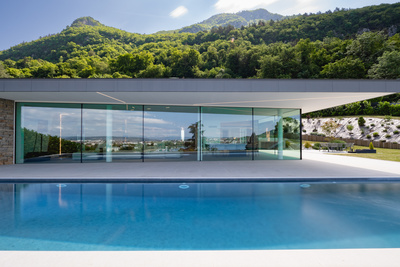
This lakeside property on Lake Annecy, located in the sought-after Petit Port district of Annecy-le-Vieux, offers a particularly compelling illustration. Set over two levels, it is distinguished by expansive glazed façades that reveal uninterrupted views over Lake Annecy.
Inside, generous ceiling heights and full-height glass walls enhance natural light throughout, placing the landscape at the very heart of the living experience.
Elevated energy standards
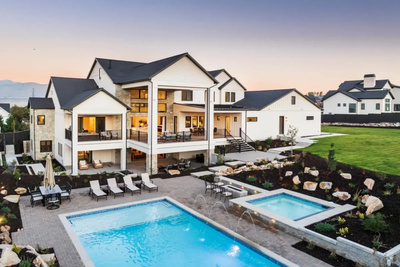
Energy standards are reaching unprecedented levels in contemporary properties, with some developments pushing the boundaries of environmental performance.
In Bluffdale, Utah, a residence of approximately 15,000 square feet, built by Cross Construction, is now recognized as the largest certified single-family passive house in the world. Powered by geothermal and solar energy systems, it also features triple-pane windows and a continuous supply of filtered fresh air.
This type of property demonstrates that exceptional comfort can be fully compatible with advanced environmental performance.
Architecture rooted in its environment
Finally, certain properties stand out for their ability to engage closely with their surroundings. Here, architecture evolves in direct response to the specific characteristics of the site.
This approach gives rise to singular residences, conceived as natural extensions of their environment rather than standalone structures.
At a time when environmental challenges and societal shifts are reshaping the way we live, the luxury real estate market is moving toward a more considered approach. In 2026, the most remarkable properties are no longer defined solely by their address, but by their…
Read more
As Easter approaches, certain houses uphold tradition while subtly reinterpreting it. Annecy Sotheby’s International Realty has brought together a selection of local signatures whose 2026 creations reflect the diversity and exacting standards of fine chocolate…
Read more
This year, Sotheby's International Realty® celebrates a landmark anniversary : fifty years of history dedicated to exceptional real estate. A singular trajectory, shaped by a unique heritage where culture, high standards, and attention to detail converge. The story…
Read more